Influencer Campaign Tracking: How to Measure Performance Across Multiple Campaigns
- SEO Zimble
- 2 hours ago
- 11 min read
You have five campaigns running at once. One influencer sent a blurry screenshot. Another hasn't posted, but the agency swears they did. The client wants a report by Friday. Your Google Sheet has three versions, and none of them matches.
This isn't a team problem. It's a process problem.
Most brands and agencies still handle influencer campaign tracking the way they did five years ago: manually, reactively, always one missing link away from a Friday night panic. When campaigns run across Instagram, YouTube, TikTok, and Facebook at the same time, the cracks don't just show. They start costing money.
This guide covers which metrics actually matter, how to build a system that works in real time, and what changes when you stop piecing it all together.
Why tracking influencer campaigns is harder than it looks
Platform fragmentation is the first real problem. Engagement rate on Instagram measures differently from view counts on YouTube, which measures differently from play counts on TikTok. Run campaigns across three or four platforms, and you're not looking at one dataset. You're looking at four incompatible ones that someone on your team has to manually reconcile, usually the night before the client calls.
Verification is the second. Influencer-submitted data: screenshots, PDFs, and WhatsApp forwards, which are unverified by definition. A screenshot can be cropped, edited, or outdated. There's no way to know if the numbers you're looking at reflect today's performance or three weeks ago, before the algorithm moved on.
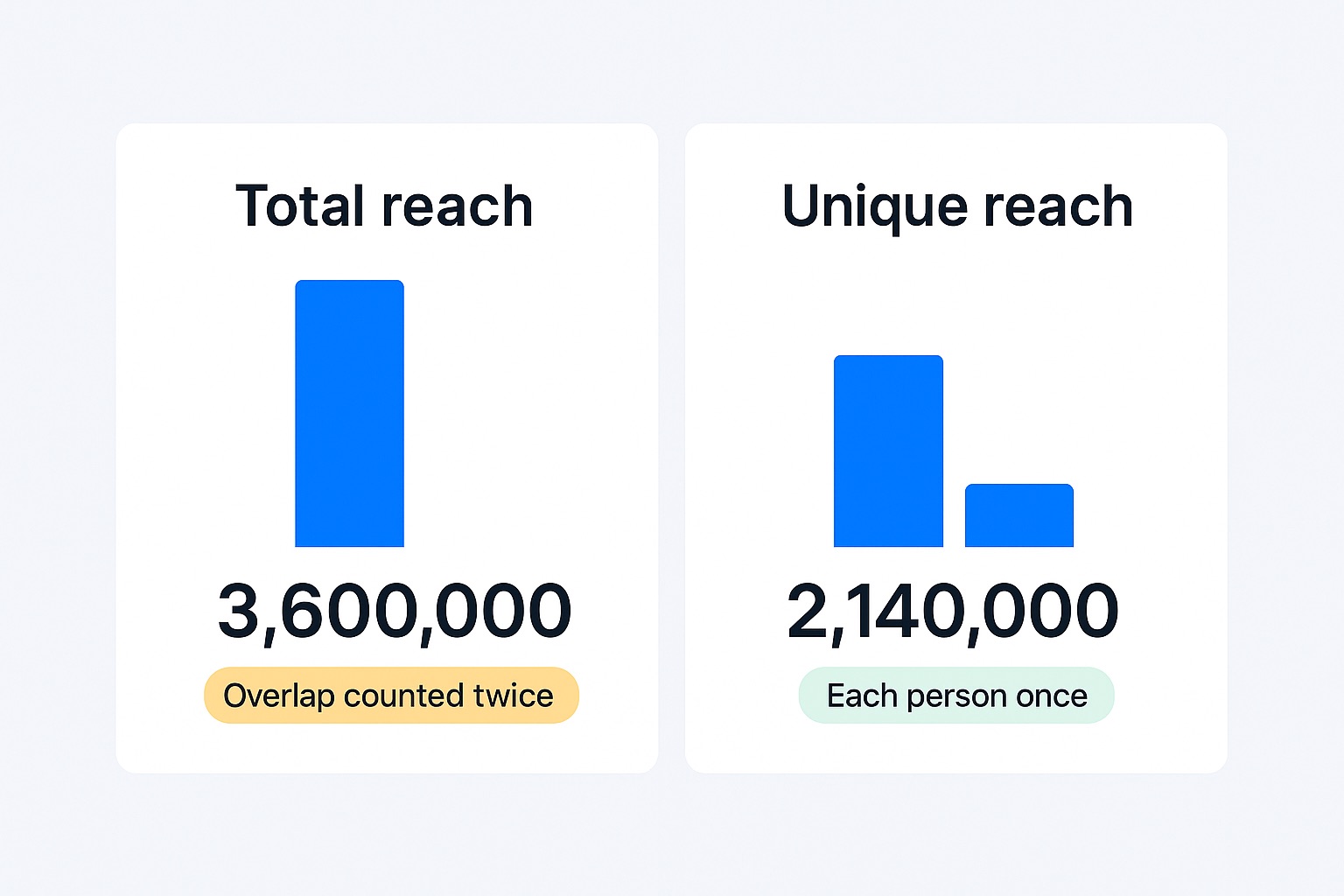
Then there's audience overlap. Ten micro-influencers, 100K followers each, that's not a million-person campaign reach. Real reach is the unique count across all their audiences. Without overlap analysis, you're almost certainly overstating results, which creates problems down the line with clients who remember what you promised.
And timing. By the time a post-campaign report reaches your inbox, the campaign is done, and any chance to course-correct is gone.
Old way | Smarter way |
WhatsApp screenshots from influencers | Live dashboard with platform-verified data |
Separate Google Sheets per campaign | Unified cross-campaign view, updated daily |
Post-campaign PDF sent weeks later | 90-day dynamic tracking from the day posts go live |
Gut feel on macro vs micro influencer mix | CPE and CPV tracked per creator, across every platform |
The point of switching isn't convenience. It's about being able to fix something on day five instead of apolozising on day forty.
Key metrics to track influencer campaign performance
Before setting up any tracking system, you need to know what you're measuring and why. For brand marketing campaigns specifically, the goal is reach and engagement, not direct revenue attribution. These are the seven metrics that actually tell you something.
Engagement Rate (ER)
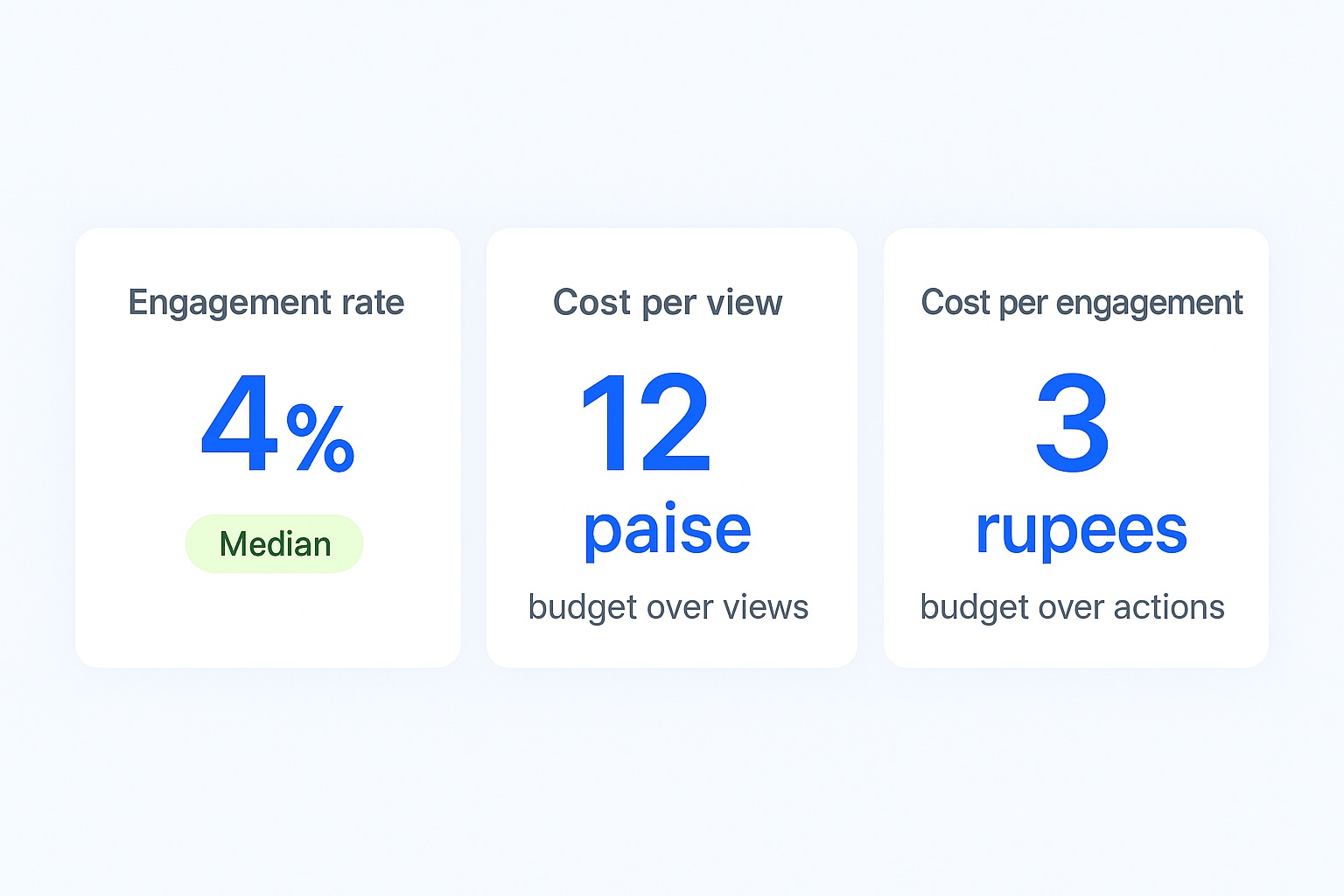
Total interactions: likes, comments, shares, saves, divided by followers. A healthy ER on Instagram ranges from 2–3% for macro-influencers to 3–6% for micro-influencers. Always look at median ER, not average. One viral post inflates the average and sets up unrealistic expectations for the next campaign.
Cost Per View (CPV)
Total budget divided by total views. Tells you how efficiently your spend is turning into eyeballs. Simple, measurable, and far easier to defend in a client meeting than vague reach estimates.
Cost Per Engagement (CPE)
Total budget divided by total engagements. For brand marketing, this is your core ROI number. It tells you what each meaningful interaction with your content actually costs.
Total reach vs. unique reach
Five influencers with 100K followers each do not equal a 500K campaign reach. There will be overlap. CultureX's audience overlap tool calculates actual unique reach across your creator pool, so projections reflect what's really happening, not optimistic arithmetic.
Engagement depth
Likes are the floor, not the ceiling. Comments, shares, saves, remix activity, replies, sticker taps, and profile visits all signal genuine interaction, the kind that tells you whether content actually landed or just appeared in a feed. Track these alongside ER for any engagement-focused campaign.
Sentiment score
50,000 views and a comment section full of complaints is not a successful campaign. Sentiment analysis breaks the comment section into positive, negative, and neutral signals at both the post level and the overall campaign level. It catches what the numbers miss.

Hashtag performance
Reach and impressions generated by campaign-linked hashtags are specifically useful for tracking organic amplification beyond each influencer's direct audience. Particularly valuable for campaigns built around a campaign hashtag or branded moment.
CultureX tracks all seven in a single reporting dashboard: ER, CPE, CPV, sentiment, and hashtag performance. Updated daily for up to 90 days, across all platforms, in one report.

How to set up influencer campaign tracking the right way
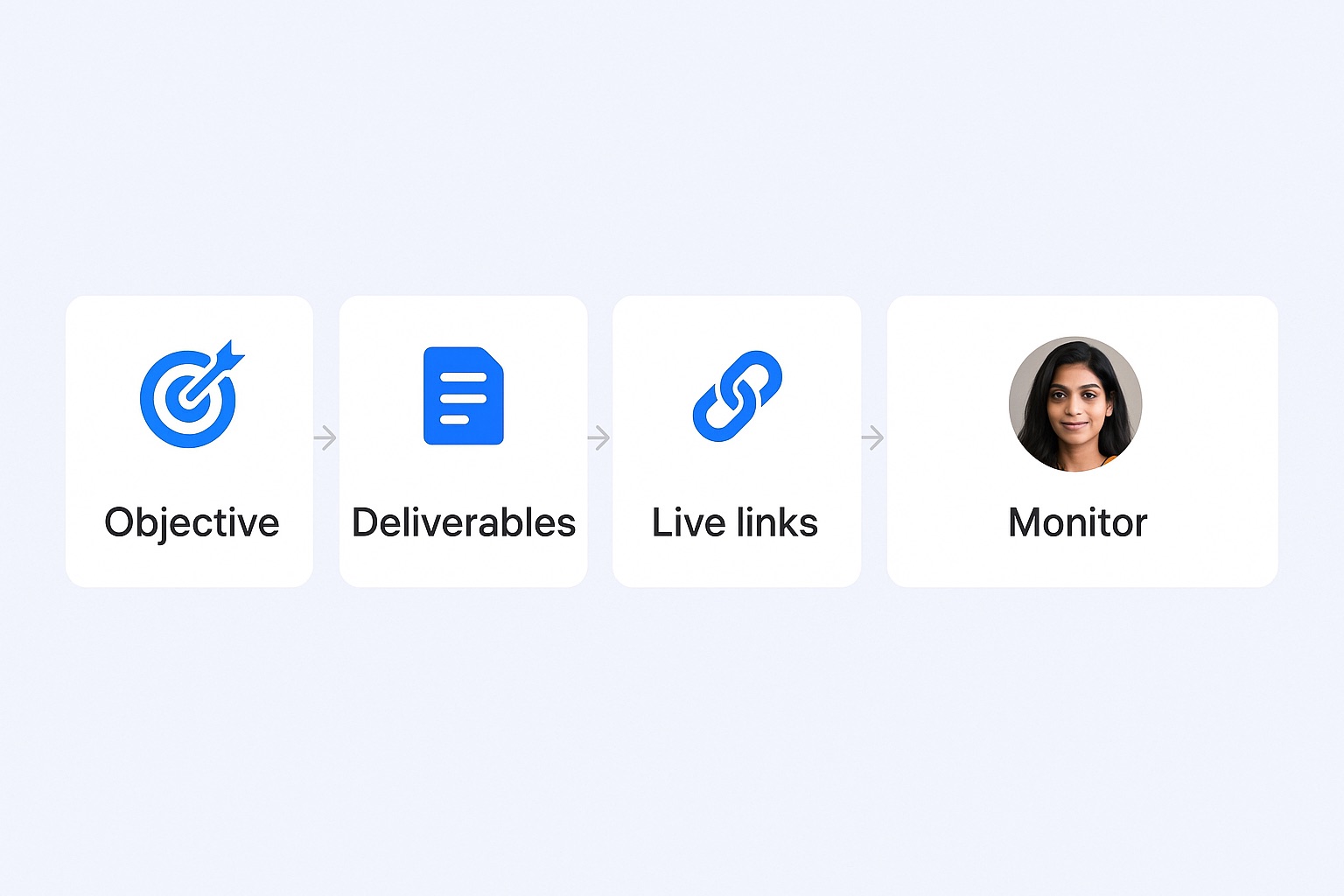
Getting this right isn't about having the most data. It's about having the right data, in the right place, at the right time. Five steps work whether you're managing one campaign or twenty.
Step 1: Define campaign objectives before you launch
The metrics you track should follow from what the campaign is actually trying to do. Tracking everything produces noise, not insight.
• Brand awareness: track reach. How many unique people did your campaign actually touch?
• Engagement: track ER, comments, shares, saves, remix activity, replies, sticker taps, and profile visits. These are the signals that show whether audiences interacted with the content or just scrolled past it.
• Traffic or conversion: track CPE. What did each meaningful action cost?
Step 2: Centralise all influencer deliverables
Decentralised communication is where tracking falls apart. When influencer coordination runs across WhatsApp DMs, email threads, Google Docs, and agency PDFs at the same time, nothing matches. Nobody has a single source of truth. Versions multiply. Someone's always working from the wrong number.
A structured workflow fixes this. Scripts go into approval. Approvals trigger video submissions. Video submissions trigger live link tracking. Every stage documented, every status visible.
CultureX's Operator Board runs exactly this pipeline: Onboarding → Scripts in Approval → Scripts Approved → Videos in Approval → Videos Approved → Videos Live. Every influencer's status in one place, no chasing required.

Step 3: Add content via live links or hashtag tracking
Once influencers go live, you have two options to pull content into your reporting.
Manual upload: paste content links directly for bulk tracking, or use influencer submission forms to collect live posts, archived content, or private posts from creators directly, no more hunting links across message threads.
Hashtag tracking: the better option at scale. CultureX automatically discovers campaign-related content as influencers post, giving you visibility without any manual input. It runs in two modes: Reach (broader, captures any post using the hashtag) and Focus (specific, captures only content matching campaign-defined criteria). Brands can see what's being posted as it happens, not two weeks later.
Step 4: Monitor in real time, not post-campaign
The live campaign dashboard shows every influencer's status across the full pipeline, updated daily, for up to 90 days after posts go live. Who's onboarded, whose script is stuck, who's live, who's three days late. All in one screen.
The value of real-time visibility isn't just operational tidiness. If a creator's content is underperforming at day five of a four-week campaign, you can redirect budget, swap content, or brief a replacement. That option disappears at the debrief.
Step 5: Analyse cross-platform in one view
CultureX pulls all performance data from Instagram, YouTube, TikTok, Facebook, and X into one unified report. No toggling between dashboards, no manual aggregation, no version control chaos.
When CPE and CPV sit side by side across platforms, you see which channels are actually working for your budget. The answer is often not what teams assumed going in.
Tracking multiple campaigns simultaneously
Managing one campaign is manageable. Managing three campaigns across two brands, fifty influencers, and a Friday client call that you're not ready for, that's a different problem.
Group reporting is what makes it workable. Instead of opening each campaign separately, you group them by brand or objective and view cumulative performance across all of them at once. Side-by-side comparison shows which campaigns are outperforming, which formats are holding up across the board, and where budget is quietly being wasted.
Content tagging adds another layer. Tag by type product review, lifestyle shot, meme, testimonial, tutorial, and you'll quickly see which formats are generating real engagement across your creator pool. That intelligence doesn't just help you write a better post-campaign report. It goes straight into the next campaign brief.
For a competitive context, CultureX's Competitor Analysis lets you search any brand profile and see how many unique influencers they've worked with and what those collaborations generated. A search for Virat Kohli's brand partnerships pulls up over 4,200 unique influencer collaborations and more than 8.1 billion total views. That's a useful number to have when a client asks how their campaign stacks up.
Using campaign analytics to prove ROI to clients
Brands and management teams don't want summaries. They want proof-specific, verifiable numbers that tie back to what you said you'd deliver at the start.
Here's what a complete ROI presentation looks like using CultureX's reporting output.
The numbers
Total views, average engagement rate, total budget spent, average CPE, average CPV, platform breakdown, and sentiment distribution. These aren't estimates or dashboard screenshots. They're platform-verified metrics updated daily, the kind that hold up when someone in the room decides to push back.
How you share it
CultureX generates shareable reports via a secure link, in branded or agency format. Clients get view-only access with no login required, just a clean dashboard with the data they asked for. Teams that prefer to work offline can export every influencer's individual performance data to CSV.
The fuller picture
Google Trends integration lets you layer campaign keyword data on top of performance metrics, showing the broader digital signal beyond content engagement. And CultureX's NLP-powered sentiment analysis breaks down comment tone across every piece of content, surfacing brand perception shifts that engagement numbers alone can't catch.
Common mistakes in influencer campaign tracking
Even experienced teams make these. Worth knowing before they become expensive.
Tracking only vanity metrics. Follower count tells you how big an audience is, not whether it paid attention. ER, CPV, and CPE are the numbers that reflect actual interaction. Follower count is a starting point for discovery, not a success metric.
Waiting until the campaign ends to review performance. Post-campaign analysis matters, but it's too late to act on. Real-time dashboards mean a problem at day five is fixable. The same problem at the debrief is just a lesson for next time.
Trusting influencer-submitted screenshots. Unverified data isn't data, it's a story someone put together for you. Platform-integrated tracking pulls metrics directly from the source. That's the only number worth putting in a client report.
Ignoring audience overlap. A campaign with ten influencers doesn't have ten times the reach of a single influencer. Some of those audiences are the same people. Without overlap analysis, reach figures are inflated, and inflated figures don't survive a second campaign when the client compares the promised audience against actual results.
Skipping sentiment tracking. 500,000 views on a video with a toxic comment section is not a win. Sentiment analysis tells you what those views actually meant for the brand, something engagement rate alone will never show you.
Keeping campaigns siloed. Every campaign produces intelligence: which creators work, which formats hold engagement, which platforms perform for this category of product. Group reporting across campaigns means that intelligence compounds. Siloed campaigns just produce one-off reports that nobody reads six months later.
How CultureX handles influencer campaign tracking
CultureX's reporting and campaign management suite is built for teams running influencer marketing at scale, brands, agencies, and enterprise marketing teams that can't afford to discover problems after the campaign ends.
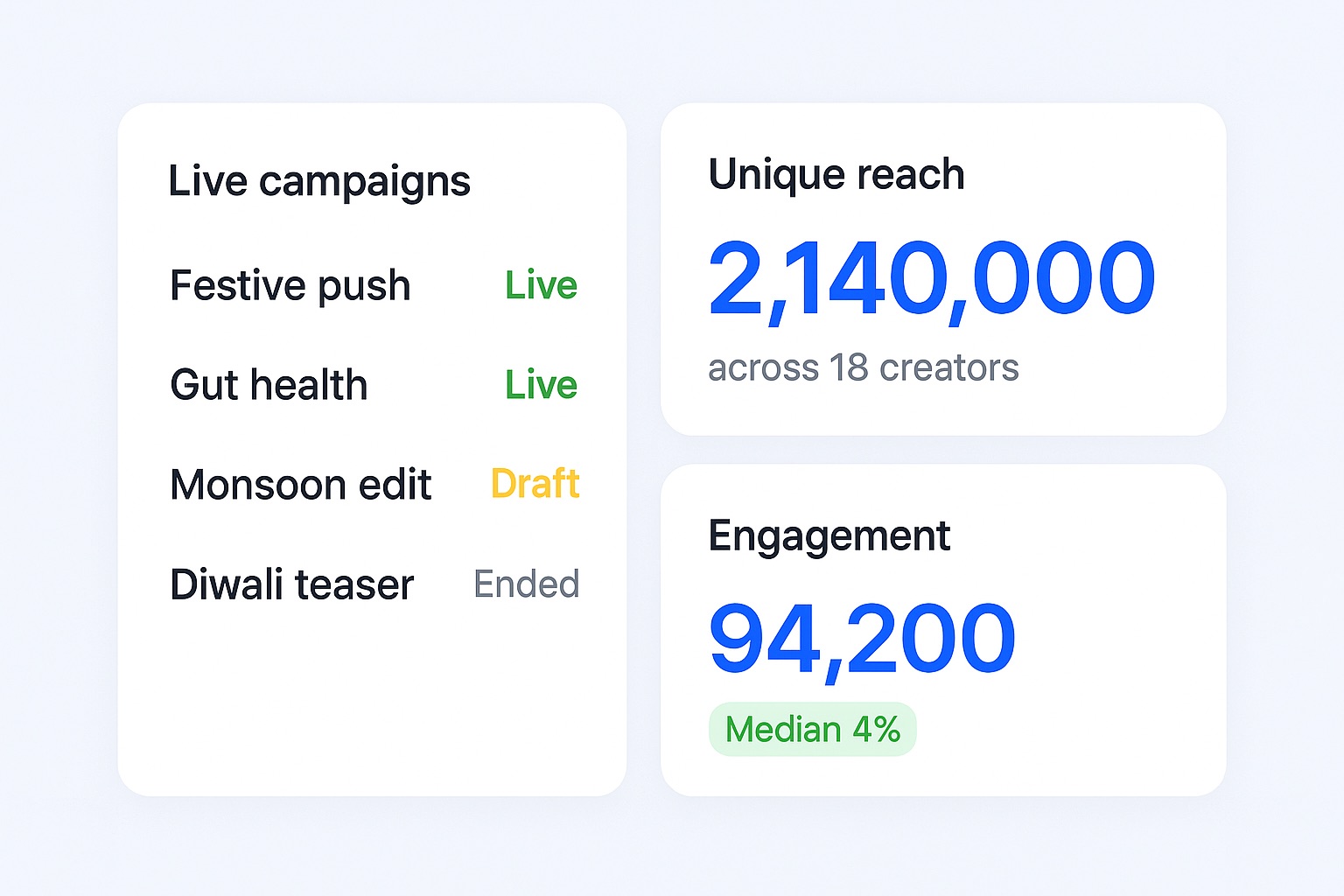
Live Campaign Dashboard. The most-used screen in the platform. It replaces the spreadsheet stack entirely and gives every team member a real-time view of campaign status across all influencers, platforms, and workflow stages.
90-day dynamic tracking. Campaign data doesn't go stale the moment a post goes live. Views, likes, comments, and engagement rates update daily for three months after publication. The post from week one still has a story to tell in week eight.
Cross-platform unified reports. Performance of Instagram, YouTube, TikTok, Facebook, and X in one report. One campaign, one view, no reconciliation required.
Hashtag tracking with Reach and Focus modes. Automatic content discovery from influencers' posts. No hunting links, no chasing DMs, no hoping the creator remembers to send through the screenshot.
NLP sentiment analysis. Every piece of content is scored and summarised at the campaign level. You know not just how much people engaged, but whether what they saw left a good impression.
Group reporting and comparison. Multiple campaigns are analysed simultaneously. Brand performance compared side by side. Each successive campaign benefits from what came before.
Client-ready sharing. Branded reports delivered via a secure link. No logins, no clutter just the data your clients asked for, in a format they can actually read.
Conclusion
Tracking influencer campaigns at scale means having visibility while a campaign is running, not writing it up afterwards. The brands doing this well aren't necessarily the biggest spenders. They're the ones who catch underperformance early, redirect budget before it's gone, and walk into client reviews with numbers that don't fall apart under questioning.
Spreadsheets and screenshots got a lot of teams to where they are. A centralised, real-time tracking platform is what takes them further.
Ready to see every campaign, every influencer, every metric in one place? Start your Free trial on cultureX
FAQs
1. How do you track influencer marketing campaigns?
Use a platform that centralises live links, engagement metrics, and cross-platform data in one dashboard, updated continuously. CultureX pulls verified data from Instagram, YouTube, TikTok, Facebook, and X into a single report, with no influencer-submitted screenshots, no manual spreadsheet reconciliation.
2. What metrics should I track for influencer campaigns?
For brand marketing campaigns: engagement rate, cost per engagement, cost per view, total reach, unique reach after overlap analysis, hashtag performance, and sentiment score. For engagement-focused campaigns, also track comments, saves, shares, remix activity, and profile visits. These show genuine audience interaction, not just passive impressions.
3. Can I track multiple influencer campaigns at once?
Yes. CultureX's group reporting lets you monitor multiple campaigns at the same time, compare cumulative performance across brands, and tag content by type to see which formats are working across your creator pool.
4. What is influencer campaign monitoring?
It's the ongoing process of tracking live content performance, influencer deliverable status, and campaign metrics while the campaign is running, not after it ends. That means knowing whether scripts are approved, whether posts are live, and whether engagement is trending where it should, all in real time.
5. How to track influencer campaign performance?
Start with clear objectives: reach, engagement, or conversion before the campaign launches. Centralize all deliverables in one platform, pull content in via live links or hashtag tracking, and monitor daily updates. CultureX tracks every influencer from onboarding to live post in one view, updated daily for up to 90 days.
6. How to measure the ROI of influencer marketing campaigns effectively?
For brand marketing campaigns, ROI is measured through reach and engagement, not direct revenue. Calculate CPE (total budget divided by total engagements) and CPV (total budget divided by total views) to understand cost efficiency. CultureX shows both metrics in real time across all deliverables, so you can have an honest conversation about what the campaign actually delivered.
7. What are the key performance indicators for influencer marketing campaigns?
Primary KPIs: engagement rate, cost per engagement, cost per view, total reach, unique reach, sentiment score, hashtag reach, and script-to-live conversion rate. For brand awareness campaigns specifically, CPM, total impressions, and share of voice are worth adding.
8. How to effectively measure return on investment from influencer collaborations?
Define whether the campaign is brand marketing (reach and engagement) or performance marketing (clicks and conversions) before you start. For brand campaigns, use a platform that tracks CPM, ER, CPE, and CPV with daily updates for at least 90 days post-live, includes sentiment analysis, and produces shareable client reports. Platform-verified data is what makes ROI claims hold up.
9. Guide to setting up influencer campaign tracking dashboards
Step 1: Define objectives and KPIs before launch. Step 2: Onboard influencers into a structured workflow, not WhatsApp or email. Step 3: Add content via live links, bulk paste, or hashtag auto-fetch. Step 4: Enable daily tracking across views, ER, CPE, and CPV. Step 5: Set up a cross-platform report combining all active channels. Step 6: Share a branded dashboard link with clients. CultureX covers all six steps on a single platform.
10. Where to find influencer campaign analytics platforms
CultureX covers discovery, campaign management, real-time tracking, and reporting in one place. It supports 400M+ creator profiles across Instagram, YouTube, TikTok, Facebook, and X, with live dashboards, hashtag tracking, NLP sentiment analysis, group reporting, and client-ready shareable reports. Learn more at culturex.ai.

Comments