top of page
CultureX Logo

What Is a White Label Influencer Marketing Platform?

  • Writer: Sanket Maheshwari
    Sanket Maheshwari
  • Jun 17
  • 9 min read

You've just sent the client their monthly campaign report. Four hours to build. Screenshots from Instagram Insights. A separate analytics tool. A spreadsheet with manually calculated CPE figures.


The client's logo isn't on it. The analytics tool's name is.


The client replies asking whether the data could be available sooner next month.

You already know the honest answer.


This is the problem a white-label influencer marketing platform actually solves. Not just the four hours. The brand in the report.

What a white-label influencer marketing platform actually is


It's a software platform that an agency licenses and presents to clients under its own branding. Logo, color scheme, domain, report templates. From the client's perspective, they're using the agency's technology. From the agency's perspective, they're delivering a professional branded service experience without having built or maintained the underlying software.


The alternative is one of three things.


Build a proprietary platform. Expensive, slow, and not core to an agency's work. A platform that took 18 months to build is already outdated when it launches, because the market has moved on.


Stitch together separate tools for discovery, tracking, and reporting. Creates fragmentation and manual overhead. Someone still has to compile the report from five tabs.


Deliver campaigns through a third-party platform whose name appears on every client-facing output. This weakens the agency's perceived ownership of the service and trains the client to associate the value with the platform rather than the agency.


Does the platform actually run the full agency workflow, or just brand a PDF?


Not all white-label features are equal. Some platforms put a logo on a PDF and call it white labeling. Here's what actually matters for an agency managing client accounts at scale.


Does the client see a live dashboard or a monthly PDF?


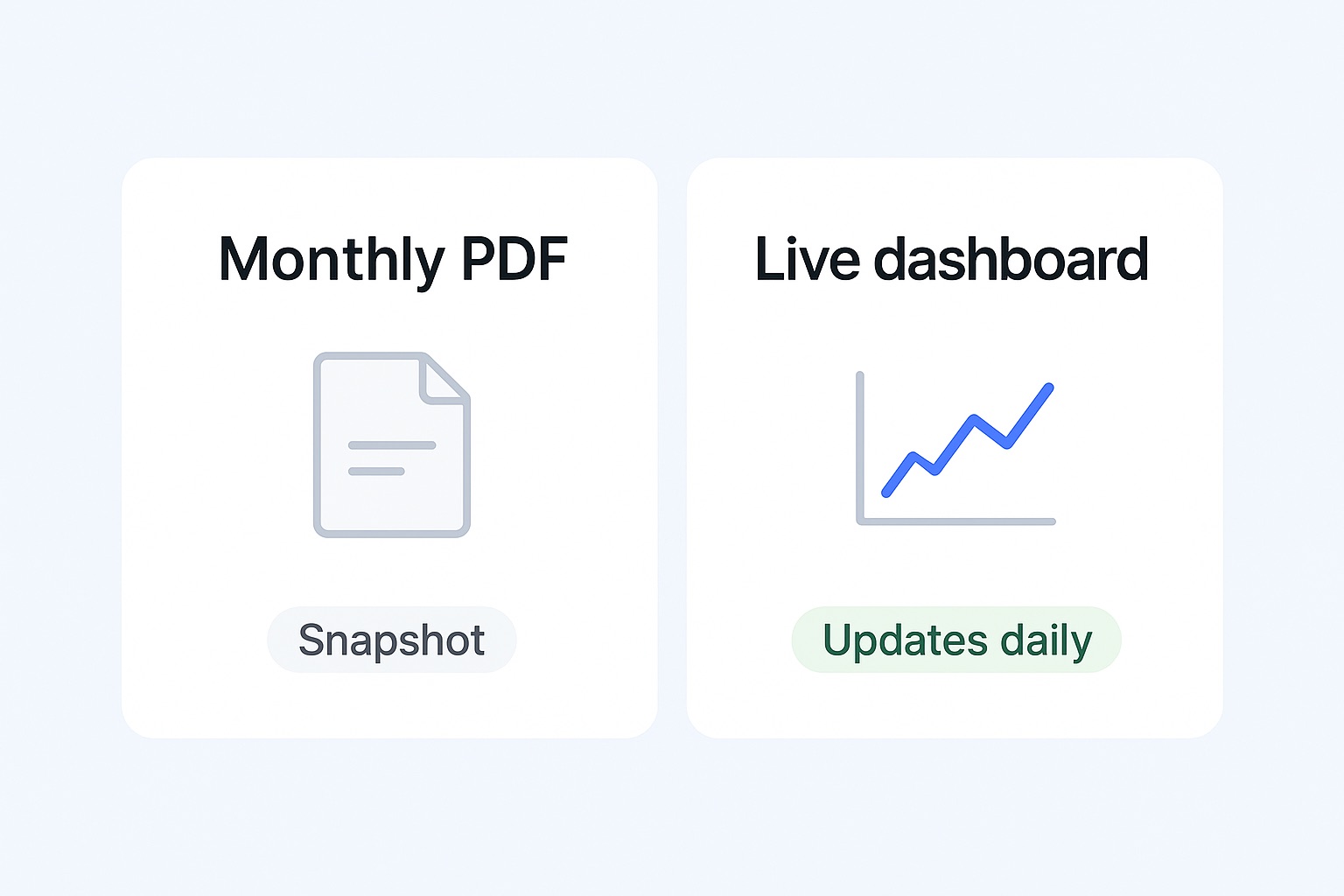
A PDF report is a snapshot that the client receives once. A live dashboard is a transparent, ongoing view of campaign performance that the client can check at any time. Clients who see live branded dashboards become less dependent on scheduled calls and more confident in the agency's real-time visibility.


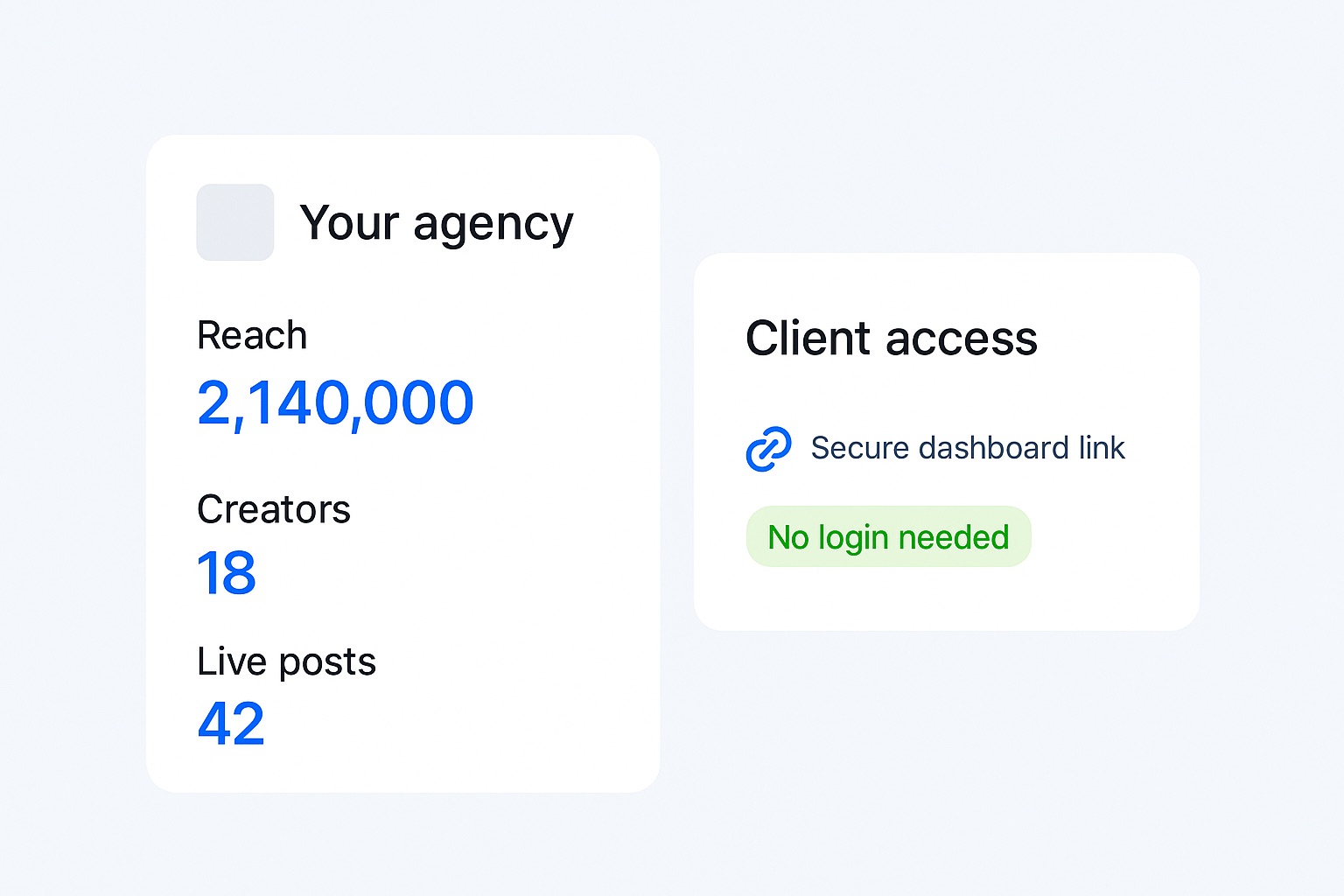
CultureX’s  reporting dashboard makes it much simpler. You can send clients a secure dashboard link with your own agency branding instead of another platform's logo. The numbers update daily for up to 90 days, there's no login required, and you don't have to stay up late putting reports together before a client meeting.


The platform also helps speed things up before the campaign even goes live. Instead of reaching out to creators one by one, agencies can use the bulk outreach feature to contact many creators together, making onboarding much quicker and cutting down on repetitive manual work.


Contract template

You can create contracts that match your brand without extra effort. You can easily customise everything from your logo size and placement to the formatting, headings, and overall content structure, so every agreement looks and feels like it came directly from your agency or brand.


Can separate client environments actually be maintained?


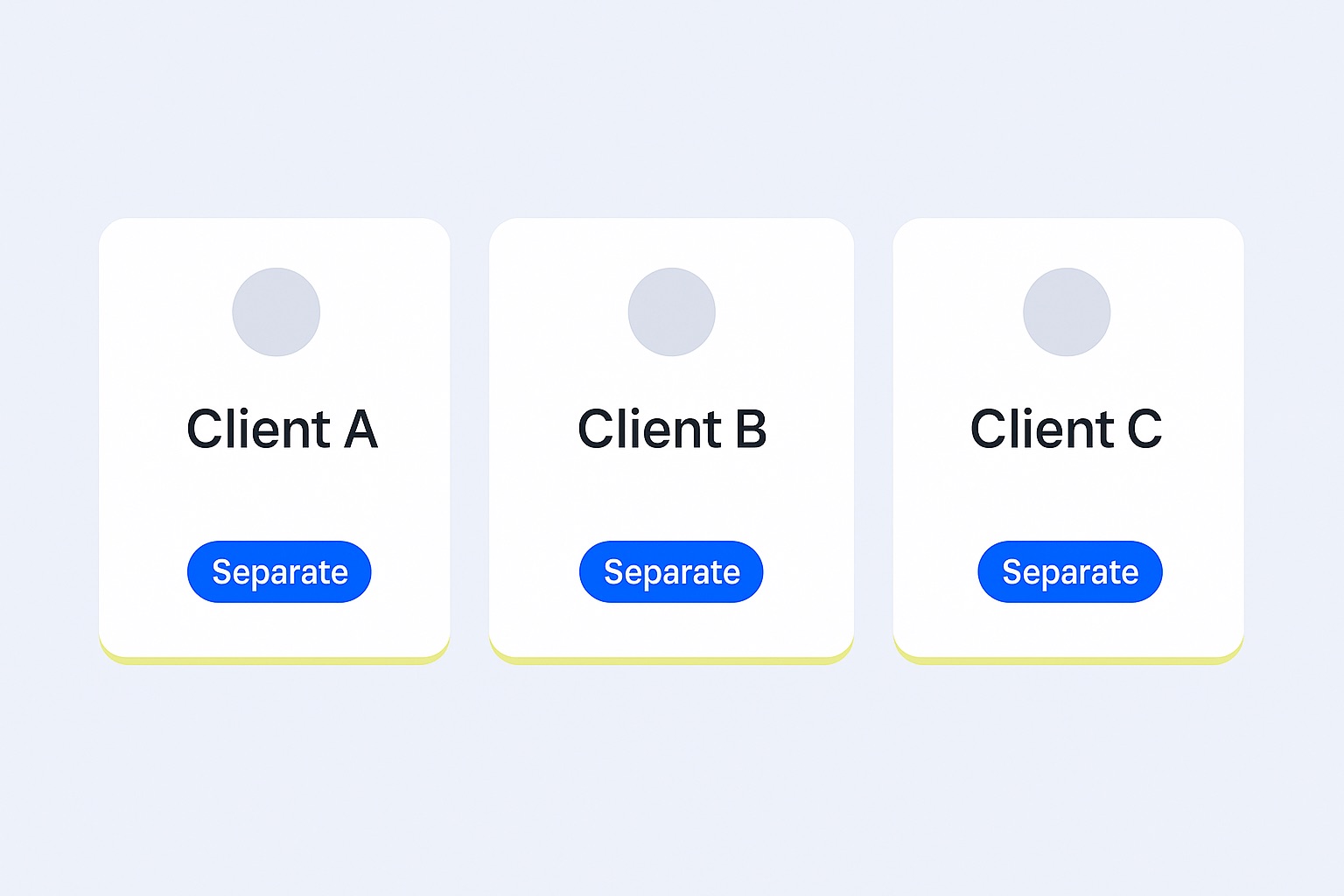
An agency managing ten client accounts needs each client's campaigns, creator rosters, and performance data completely separated. Not tabs in a shared spreadsheet. Not separate logins to the same undifferentiated interface.


Agencies that manage multiple clients need a simple way to keep each account separate. Dedicated workspaces and permission settings help keep campaign data organized and prevent teams from mixing things up. Otherwise, the workload keeps growing with every new client. Once the system is in place, onboarding a new account is much easier and doesn't require rebuilding your workflow.


Can the discovery service be delivered under the agency's brand?


The agency's value to the client often starts with creator shortlisting. A white-label platform's discovery capability determines whether the agency can deliver shortlists that are credible, data-backed, and fast, or whether the process still requires 15 to 20 hours of manual database browsing per campaign.


CultureX's "Search influencer or ask AI" feature searches 400M+ creator profiles by niche, audience location, engagement rate, audience demographics, and credibility score simultaneously. A qualified, credibility-checked shortlist delivered to the client under the agency's brand, built in under an hour rather than over two days.


Here's what the credibility data shows per creator, and these numbers vary per profile:


  • Real People: These are actual people using the platform who follow a creator out of genuine interest. They are the audience most likely to engage with content and respond to campaigns naturally.


  • Suspicious Accounts: These accounts don't appear to belong to real, active users. They may be bots, fake profiles, spam accounts, or accounts that have been inactive for a long time, so they add little to no value for brands.


  • Audience geography: Where the followers actually are, not where the creator is based.


That data goes into the client-facing shortlist under the agency's brand, making the recommendation defensible and the selection process credible.


Does the campaign workflow run inside the platform or outside it?


Brief delivery, script approval, content review, and deliverable tracking. This is where clients spend most of their time interacting with the agency's service. If that workflow runs through WhatsApp threads and email chains, the agency's brand isn't present.


CultureX's Operator Board lets you keep track of every creator deliverable from a single dashboard. Whether a script is under review, content has been submitted, approvals are pending, or a post has gone live, you can see it all in one place. If you're running three client campaigns with 30 creators, you don't have to jump between 30 different WhatsApp chats to know what's happening.


See what CultureX looks like as a branded platform for your agency clients. Explore the agency workflow from discovery to report.


Build vs buy vs white label: which decision actually fits your agency?


Most agencies face this once and get it wrong. Building when they should have bought. Or buying a generic tool that doesn't support branded client delivery.


Approach

Upfront cost

Time to deploy

Branded client experience

Best for

Build proprietary platform

Very high (Rs.50L to Rs.5Cr+)

12 to 24 months

Full control

Large agencies with dedicated tech teams and 50+ client accounts

Use standard third-party tool

Low to moderate

Days to weeks

Minimal, tool branding visible

Individual consultants or small agencies not yet at retainer scale

White label an existing platform

Moderate (SaaS licence)

Days

Full agency branding

Agencies at 5 to 50 client accounts wanting branded delivery without build cost

White-labeling the right platform is the right call for most agencies, whether they're early-stage consultants or large enterprises. Branded client experience, professional reporting, and scalable campaign management without the 12 to 24-month build timeline.


Building your own platform sounds great until you look at the time and money it takes. By the time you've spent 18 months and around Rs. 2 crore building it, the market has already changed, and you're playing catch-up. With a white-label platform that's already connected to Instagram, YouTube, TikTok, and that indexes 400M+ creator profiles, your agency can focus on winning clients and running campaigns instead of fixing software.


How does white-label reporting change the client retention conversation?


An agency that delivers campaigns through a named third-party platform trains the client to associate the value with that platform. When the retainer comes up for renewal, the client asks whether the agency's strategic layer is worth the fee on top of the platform cost.


An agency that delivers campaigns through its own branded experience trains the client to associate the value with the agency. The platform is invisible. The agency's expertise is what the client sees.


Three things change when the client-facing experience is fully branded.


The retainer conversation shifts. When clients see live branded dashboards with CPE, reach, and sentiment updated daily, the value of the retainer is self-evident. The agency doesn't need to justify its fee in a monthly deck. The data does it.


The agency becomes the platform itself. Clients aren't logging into someone else's platform,they're logging into the agency's own system. That small difference changes how they see the relationship and strengthens the agency's position as a long-term partner.


Reporting becomes a revenue signal. The same goes for reporting. Spending hours putting together manual reports costs time and effort. A live dashboard that stays up to date and is ready to share anytime highlights the work being done in real time and naturally supports upsell discussions.

What to check before committing to a white-label influencer marketing platform


Six questions that expose the difference between genuine white labeling and cosmetic branding.


  • Is the branding actually white label? Does the client-facing dashboard, report, and shareable link show the agency's logo or the platform's name?

  • Can separate client environments be maintained? Or is it a shared workspace with tabs?

  • Does the discovery tool surface audience-level data? Location, demographics, credibility score. Not just creator-level metadata.

  • Does the campaign management workflow run inside the platform? Can you handle briefs, content approvals, and deliverables in one place, or do you still have to rely on WhatsApp chats and endless email threads?

  • Is reporting live? The report updates automatically every day and can be shared with a simple link, so there's no need to create a new PDF every time.

  • Is audience overlap analysis available? So the reach figure the agency presents to clients is accurate and defensible, not just a combination of follower arithmetic.


If not, then the platform is branded discovery with a manual for everything else.

Six signs the current agency setup needs a white-label platform


  1. You spend four or more hours per client per month building campaign reports from data pulled across multiple separate dashboards.

  2. Clients see a third-party platform's name on their reports or dashboards instead of your agency's brand.

  3. A new client account can't be onboarded quickly because the campaign workflow lives in a personal spreadsheet rather than a structured system.

  4. A client has asked whether the campaign data is real-time, and the honest answer was "we pull it weekly."

  5. Creator shortlists go to clients without credibility data (real follower percentage, suspicious account rate, audience geography) because the current tool doesn't surface it.

  6. You've lost a retainer renewal conversation where the client's main concern wasn't your strategy but their ability to see what was happening between monthly calls.


The agencies winning retainer renewals in 2026 are not the ones with the best campaign results alone. They're the ones whose clients experience the agency's professionalism at every touchpoint. From the branded shortlist to the live dashboard to the post-campaign report, ready before the debrief call.


The platform is invisible. The agency's expertise is what the client remembers.

Ready to deliver influencer campaigns under your agency's brand without building software from scratch? Start your free trial on CultureX.

FAQs


What is a white-label influencer marketing platform?

A software platform that an agency licenses and delivers to clients under its own branding, logo, color scheme, domain, and report templates, rather than under the platform provider's name. From the client's perspective, they're using the agency's technology. Discovery, campaign management, content approval, live tracking, and reporting all run under the agency's brand in one system.


Why do agencies use white-label influencer marketing platforms?

The biggest reason is that agencies want to keep the client experience under their own brand. Instead of sending clients to another platform, they can present everything as their own service. It also makes the team's job easier because creator discovery, approvals, tracking, and reporting are all managed from one place. On top of that, branded dashboards and data-backed creator lists give agencies more confidence when discussing campaign decisions with clients.


What features should a white-label influencer marketing platform have?

A white-label platform should make life easier for both agencies and clients. It should include branded dashboards that can be shared via a secure link, separate spaces for each client, creator discovery with audience insights, campaign management for briefs and approvals, automatically updating reports, and audience overlap analysis to make campaign reach estimates more accurate.


What is the difference between a white-label platform and a standard influencer marketing tool?

A standard tool shows its own branding in every client-facing output. Clients know they're looking at a third-party platform. A white-label platform shows only the agency's brand. Clients see the agency's system, not the underlying software. The operational capabilities can be identical. The brand perception and the retainer dynamic are completely different.


How do agencies price white-label influencer marketing services?

Most agencies either include the platform cost in their monthly retainer or list it separately as a technology fee. Since a good platform reduces manual work like reporting and campaign tracking, the time saved often makes up for the cost. Some platforms, such as CultureX, also offer white-labeling at no additional charge, allowing agencies to provide a fully branded experience without adding extra software costs. 


Can a white-label influencer marketing platform handle multiple client accounts?

Yes, but it depends on the platform. If you're managing multiple clients, look for one that gives each client their own workspace rather than putting everyone on the same dashboard. It should also let you control who can access what, while giving admins a way to see performance across all accounts. Without that separation, things can get messy as you add more clients.


How does CultureX work as a white-label influencer marketing platform for agencies?

CultureX's reporting dashboards share via branded secure links, no client login required, updated daily for 90 days. The Operator Board provides a single view of every creator deliverable across all campaigns. Discovery searches 400M+ profiles, with audience credibility data built into every result; those numbers vary per creator. Separate client workspaces keep campaign data organized by account. Every client-facing output, shortlist, dashboard, and report carries the agency's brand rather than CultureX's name.


Comments


bottom of page