The short version
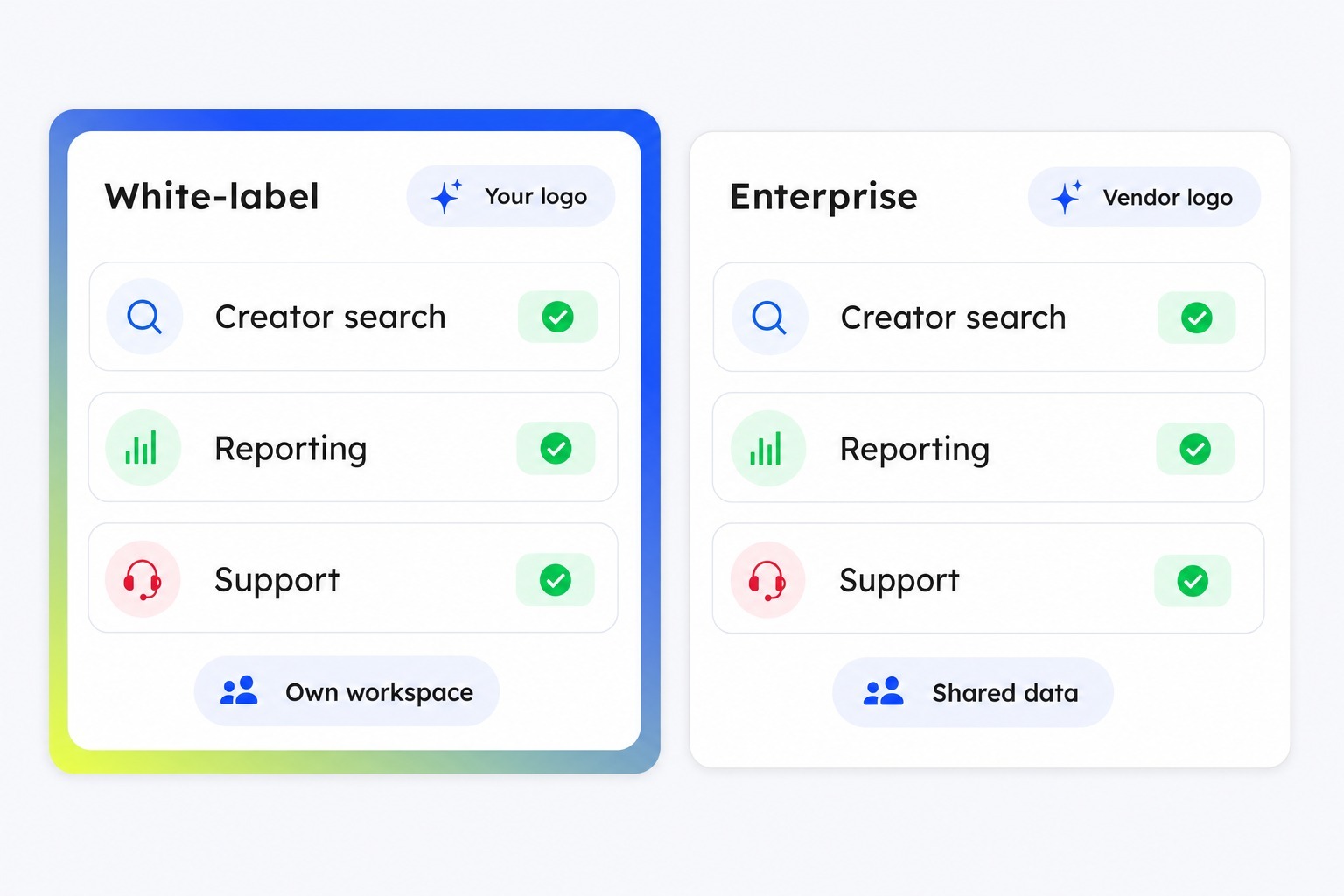
- White-label means your client sees your agency’s brand on every screen and report. Enterprise means higher limits, custom integrations and dedicated support, usually with the vendor’s name visible.
- On most modern platforms this is a plan tier, not 2 separate products. On CultureX, white labelling starts at the Business plan and Enterprise adds custom limits on top.
- Decide how you want clients to see your agency first. Then pick the plan that supports it.
An agency wins a $15,000 creator campaign for a D2C skincare brand. Week 3, the client opens the campaign report and the first thing on the page is a software company’s logo. The client’s next question is whether they should just buy that software themselves.
That moment is the whole white-label vs enterprise debate. Both terms get thrown around in sales calls as if they were opposites. They are not. One is about who the client sees. The other is about how much the platform can carry. This post explains what each actually means for an agency, what each costs you, and how to decide before you sign.
What white-label means for an agency
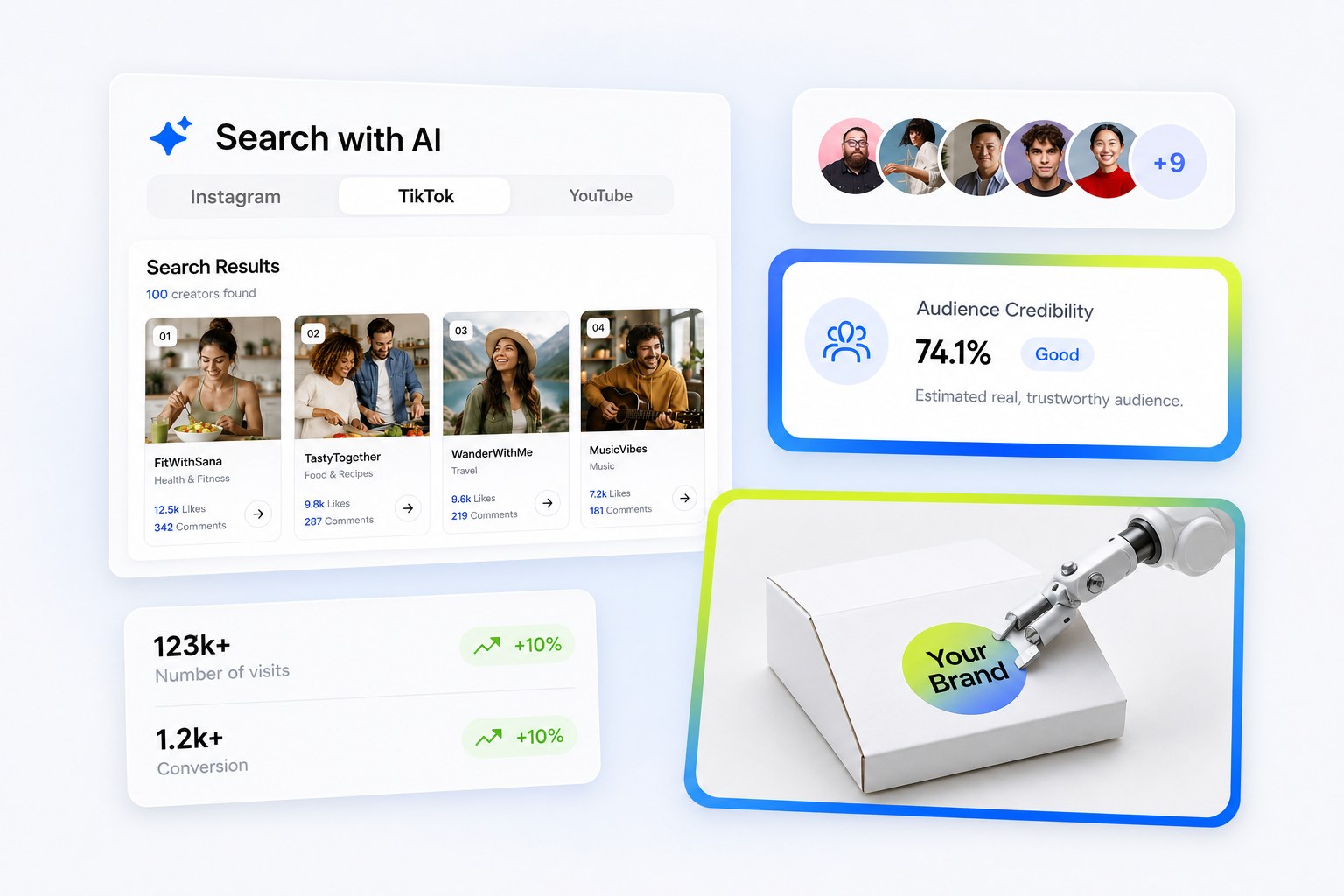
A white-label platform lets an agency run its work under its own brand. The client sees the agency’s logo, colours and name on the login page, the dashboard and every report. The software sits behind it and never introduces itself.
That matters because clients hire an agency to handle the whole job, from planning to reporting. If another company’s name shows up on every screen, the service starts to feel rented. White labelling keeps the agency in front of the client for the full relationship, and it removes the awkward “so what does the software do and what do you do” conversation.
Two things white labelling is not. It is not a bigger feature set. Under the branding, a white-label plan usually runs the same product as everyone else. And it is not automatic. Check exactly what gets rebranded. On CultureX, the agency setup covers your logo and visual branding, a custom domain, your agency email and platform title, and team access managed from 1 admin account. The campaign operator board your team runs day to day can carry the same branding, so the client never sees CultureX at any stage.
What enterprise means and what it costs
In creator discovery and campaign management, “enterprise” usually means 4 things: higher usage limits, advanced user permissions, custom integrations with the client’s existing systems, and dedicated support with a named account manager.
Large organisations need all 4. Many agencies end up paying for 2 they rarely touch. A 6-person agency running 5 client campaigns a month does not need custom API work. It needs enough searches, enough outreach volume and a report the client can open on a phone.
The other cost is flexibility. Enterprise contracts tend to come with fixed workflows, longer onboarding and annual commitments. As the agency grows, changing process or moving platforms gets harder because day-to-day operations are wired into the tool. None of that is a reason to avoid enterprise. It is a reason to be sure you need it.
CreatorIQ is the enterprise platform agencies most often benchmark against; see how CultureX compares to CreatorIQ on price and white-label flexibility.
White-label vs enterprise, side by side
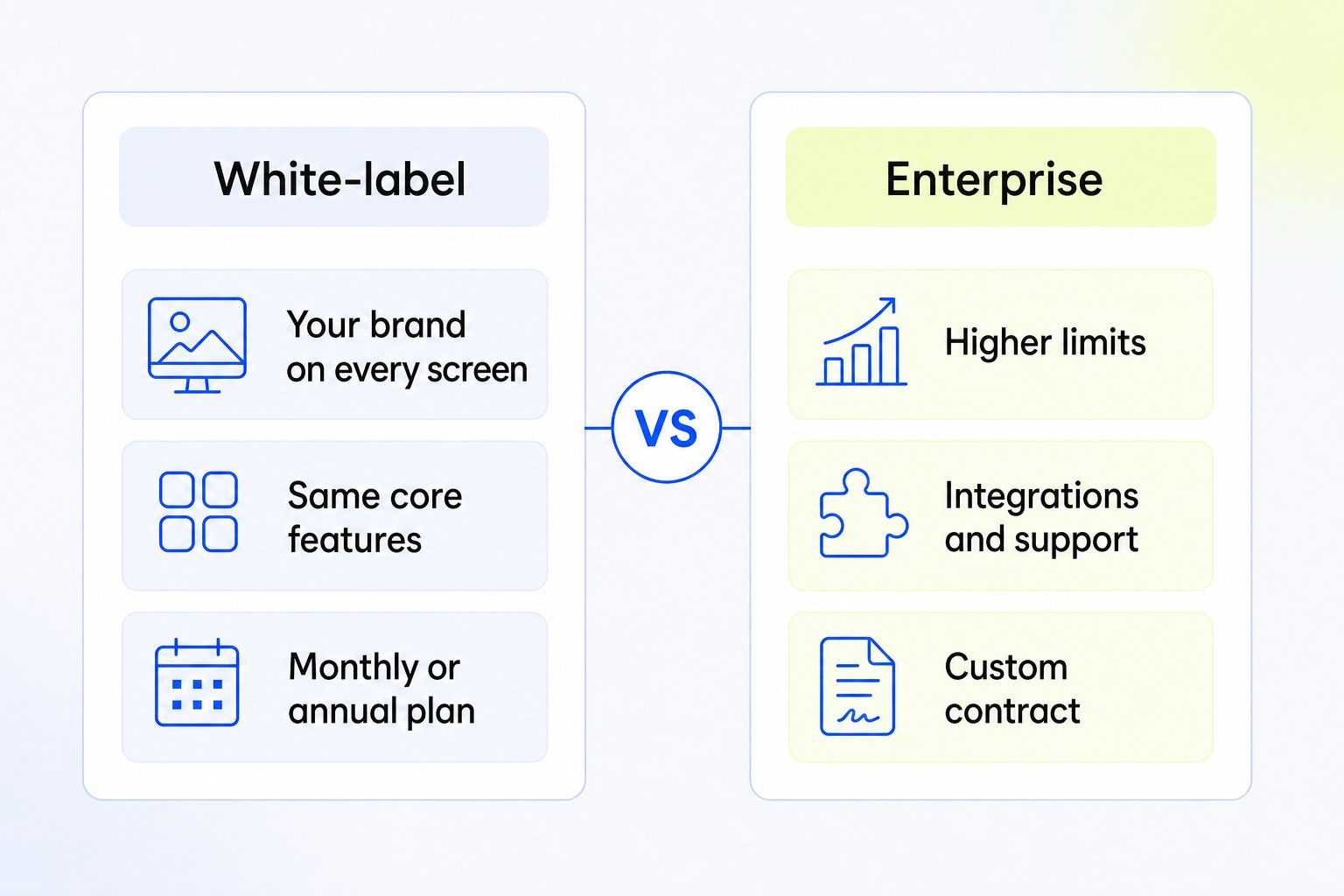
| Question | White-label | Enterprise |
|---|---|---|
| Who does the client see? | Your agency, on every screen and report | Usually the vendor, unless white labelling is included |
| What do you get more of? | Brand control and client perception | Usage limits, permissions, integrations, support |
| Who is it built for? | Agencies with brand-sensitive clients | Large teams and corporates with complex workflows |
| Typical commitment | Monthly or annual plan | Custom contract, usually annual |
| Main risk | Assuming branding means more features | Paying for capacity you do not use |
It is usually a plan tier, not a fork in the road
The comparison above assumes you have to choose. On most current platforms you do not. White labelling is a feature included from a certain plan up, and the enterprise tier is that same plan with custom limits and support on top.
CultureX works this way. The white-labelled dashboard is included from the Business plan up, which is the plan built for established agencies. The Enterprise plan keeps the white labelling and adds custom limits across every suite. The free Starter plan and the Growth plan do not include it. The full breakdown is on the pricing page.
So the real question for an agency is rarely “white-label or enterprise”. It is “which tier covers this year’s client volume, and does that tier carry our brand”. A 3-client boutique and a 40-client network can both be white-labelled. They just sit on different tiers.
What a white-labelled campaign looks like to your client
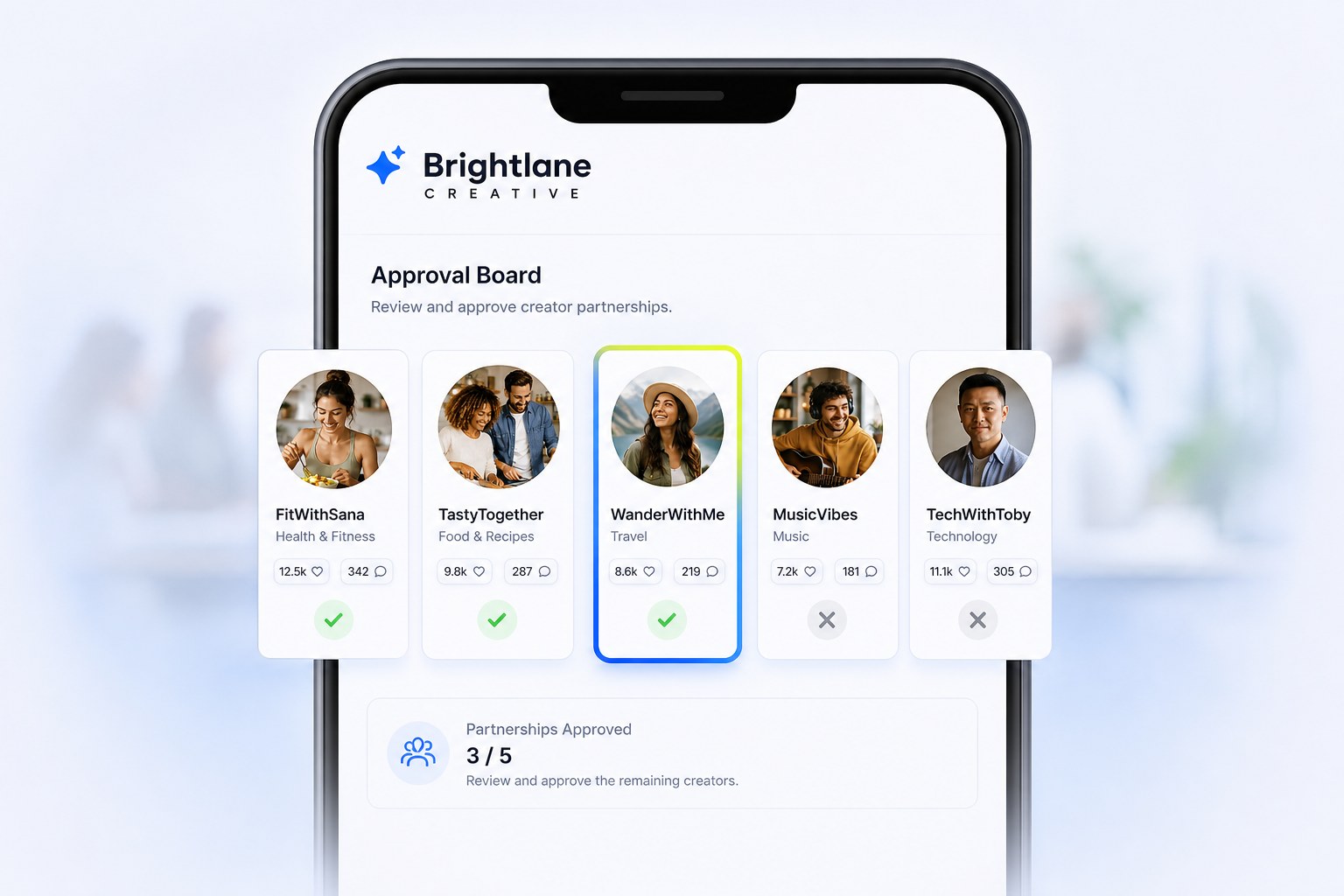
The easiest way to judge white labelling is to walk a campaign from the client’s side.
Your team searches 400M+ creator profiles in the Influencer Suite, shortlists 30 for a festive launch, and builds the media plan with deliverables and creator prices. The client gets a link to the approval board. It carries your logo and your domain. They accept 22 creators and drop 8 with a reason on each. Scripts, drafts, go-live links and published content move through the same branded board. At the end, the report shows views, engagement, CPE, CPV and ROI with your name on it.
The client experience is 1 agency, start to finish. The software did the heavy lifting and never got a credit. That is the entire product.
The proof it changes the numbers as well as the logo: SyncWync cut campaign turnaround time by 70% and saved 600+ hours, and Illuminati scaled to 4,500+ creators without adding headcount. Both are agencies. Both run client work through the platform under their own process.
4 questions to answer before you sign
Answer these with the leadership team in the room, rather than only whoever is closing the deal.
- Do your clients care whose name is on the report? Brand-sensitive clients and retainer relationships usually do. Project clients who only want results on time often do not.
- How many clients will you run through the platform this year? This sets the tier. Count campaigns per month and creators per campaign, then check the plan limits against that number.
- Do you need integrations, or do you need reports? If the answer is “a report the client can open on a phone”, you are not an enterprise buyer yet.
- Will you have both kinds of client at once? Most agencies do. Pick a platform where the branded and unbranded views can run side by side rather than 2 tools.
If you are still evaluating platforms, our guide to what to test on an influencer marketing platform trial gives you a test plan. For the wider category, see what a creator economy platform is.
See CultureX in action
See the white-labelled board from your client’s side, with your logo on it, in a 30-minute walkthrough.
Frequently asked questions
What is the difference between white-label and enterprise influencer platforms?
A white-label platform runs under the agency’s own branding, so the vendor is invisible to the client at every touchpoint. An enterprise platform offers higher usage limits, custom integrations and dedicated support, and may or may not include white labelling. On many platforms, including CultureX, white labelling is a plan feature and enterprise is the top tier of the same product.
Why would an agency choose a white-label platform?
Client perception. Agencies serving brand-sensitive clients want the whole experience, from approval board to final report, to look like the agency’s own work. A third-party name on every screen quietly undercuts that.
Does white labelling mean fewer features?
No. White labelling changes what the client sees, not what the platform does. Under the branding, you run the same discovery, outreach, campaign management and reporting as any other user on that plan.
Does CultureX offer white labelling for agencies?
Yes. The white-labelled dashboard is included on the Business and Enterprise plans. It covers your logo and visual branding, a custom domain, your agency email and platform title, and team access from 1 admin account.
Is CultureX an enterprise influencer marketing platform?
CultureX has an Enterprise plan with custom limits across every suite, white labelling and dedicated support, and it is used by 100+ agencies and 500+ brands. Whether you need that tier or the Business plan depends on client volume, not on the label.