
What Is Social Listening? A Complete Beginner's Guide
- Sanket Maheshwari
- Jun 21
- 8 min read

Updated: Jun 22
It's a Tuesday morning, and a brand manager is going through Instagram when a post catches her eye. A creator she doesn't recognise is mentioning her brand. She opens the comments and finds a mix of curious users and people still talking about an issue that happened a few weeks ago.
The post has 8,000 likes.
The brand has no idea it exists because nobody tagged the official account.
The brand is being talked about. The brand is not listening.
That gap is exactly what social listening is built to close. And getting a basic system in place is a lot simpler than most brands assume.
What social listening actually means
Social listening is the process of tracking and analysing conversations about a brand, product, competitor, or category across social media, and using that information to make better decisions.
It keeps an eye on tagged brand mentions, posts that mention the brand without tagging it, campaign hashtags, competitor mentions, and the wider conversations your target audience is already having online.
The emphasis is on understanding, not just tracking. Tracking tells you a conversation happened. Listening tells you what it means for the brand.
A brand that only checks its tagged mentions is doing the social media equivalent of reading only the emails addressed directly to them. The conversations that matter most for reputation management, product decisions, and competitive positioning often happen without a direct tag.
Social monitoring vs social listening
Most brands already do some form of social monitoring. Checking tagged mentions, reviewing direct comments, and looking at branded hashtag volume. That is social monitoring. It tells you what happened.
Social listening takes things a step further. Instead of just tracking conversations, it looks for patterns and helps brands understand what people are really talking about. It shows which topics matter most to the audience, whether opinions are changing, what competitors are doing to spark engagement, and what people in the industry are discussing that the brand hasn't addressed yet.
A simple example makes the difference clear:
Social monitoring: Our post received 200 comments, and 40 of them were negative.
Social listening: Most of those negative comments are about the packaging. People are saying the same thing on the pages of three competitors, too. This isn't just our problem it's something people across the category are talking about.
The second insight requires listening, not just monitoring. And it is the kind of insight that changes a product decision, not just a social media response.
The four things brands actually use social listening for
Brand reputation management
Not every conversation about your brand includes a tag or mention. A customer might share a bad delivery experience, a creator may review your product, or someone could mention your brand in a discussion without notifying you.
If you're not listening, you'll never know those conversations happened. Social listening helps brands catch these mentions, understand overall sentiment, and decide whether action is needed.
CultureX's Track.social Hashtag Analyser tracks brand-specific and campaign hashtags across Instagram, YouTube, and TikTok. It collects at least 50 posts per platform each day and shows whether the overall sentiment is positive, neutral, or negative.
Competitor tracking
Sometimes the best way to understand your market is to watch what your competitors are doing on social media. Their creator partnerships, top-performing content, audience reactions, and customer conversations can all provide useful insights and highlight gaps your brand can leverage.
CultureX's Listenings.ai covers this at two levels:
Market Benchmark: the brand versus up to 10 competitors in one view, tracking followers, engagement rate, Social Score, average views, and audience demographics simultaneously

Competitive Watch: Get a detailed one-on-one comparison with a competitor, including views, likes, comments, engagement rate, growth trends, hashtag usage, and the influencers they're currently working with.

Here's what to look for in a platform's competitor tracking capability:
Branded content filter: Helps you tell the difference between paid partnerships and regular organic mentions, so you know what competitors are actually investing in.
Comment sentiment on competitor content: Looks beyond likes and views to show how people are reacting in the comments and what they really think about the content.
Real-time creator partnership visibility: Shows which creators your competitors are working with right now instead of relying on outdated campaign data.
Trend spotting
The conversations happening in a brand's category right now are the best early signal of what the audience will care about next month. A brand that spots a rising topic before it goes mainstream has a content and product advantage. One that notices six months later is playing catch-up.
Instead of tracking only your brand's content, social listening keeps an eye on conversations across the industry. That makes it easier to see which topics are getting more attention, what types of content people are saving and sharing, and which new issues people have started raising in the comments.
CultureX's Listenings.ai Content Radar uses AI Smart Labels to categorise competitor posts into structured themes, making it easier to spot which content directions are gaining traction before they peak.

Crisis detection
On social media, small issues can become big ones in no time. One negative comment can spark hundreds more, a creator's post can go off track, or a campaign hashtag can start getting attention for all the wrong reasons.
The brands that catch these early almost always have one thing the others do not: real-time sentiment monitoring.
CultureX's Track.social Hashtag Analyser flags negative sentiment spikes in hashtag conversations as they appear, not in the next day's report. The Comments Radar classifies comment patterns by type, so a sudden spike in service issue comments surfaces as a pattern rather than a buried individual complaint.
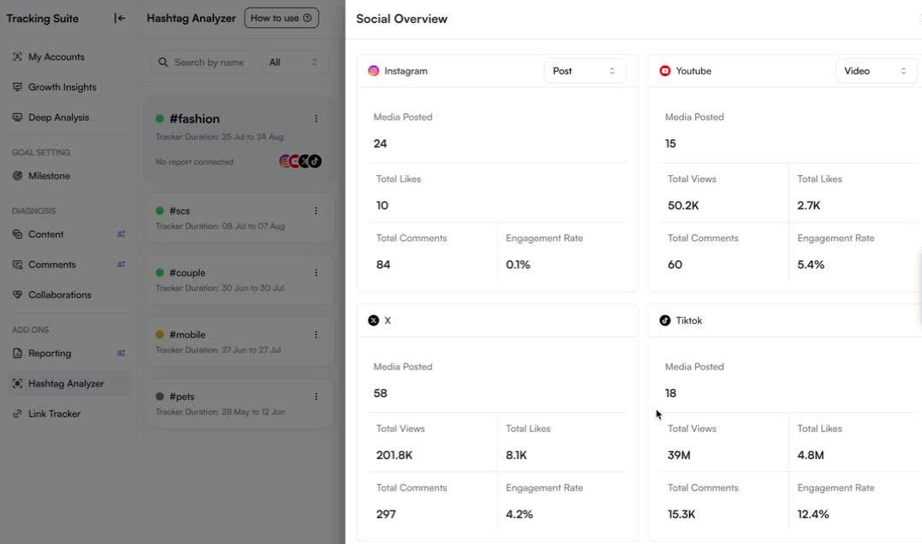
A perfect fix: tracking volume and sentiment together is the early warning system. Volume alone tells you something is happening. Sentiment tells you whether it needs an immediate response.
See how CultureX tracks brand mentions, hashtag sentiment, and competitor activity across Instagram, YouTube and TikTok in one dashboard. Explore the social listening workflow.

How to set up a basic social listening system from scratch
This does not require a dedicated analytics team. Five steps to get a working system in place.
Step 1: Define what to listen to. Start with four categories. The brand name, including common misspellings. The brand's campaign hashtags. The category keywords the target audience uses to talk about the product type. And two or three direct competitor names. These are the inputs any social listening setup needs to function.
Step 2: Choose which platforms to cover. Where does the target audience actually discuss this category? For most consumer brands in India in 2026, Instagram, YouTube, and TikTok cover all from the start rather than adding one at a time.
Step 3: Set up hashtag tracking. Every campaign needs a dedicated hashtag that the brand monitors in real time, not in a weekly summary. The hashtag is the clearest direct signal of what the campaign conversation looks like as it develops. CultureX's Track.social Hashtag Analyzer connects directly to the reporting module, so hashtag tracking data flows into campaign reports automatically rather than getting compiled by hand.
Step 4: Monitor competitor activity weekly. Assign one person to monitor competitor content performance, new influencer partnerships, and comment sentiment weekly. This does not need to be a full-time analyst role. With Listenings.ai's Market Benchmark view, one team member can review all key competitors in a single session.
Step 5: Classify what the brand hears. A spike in brand mentions doesn't mean much unless you know what's being said. Some comments may be praise, others may be complaints, and others may be questions from potential buyers. AI comment classification organises comments by type, helping your team find key patterns without spending hours reading them one by one.
Six signs it is time to set up social listening.
The brand finds out about conversations mentioning it from a screenshot someone sends in a WhatsApp group, not from a monitoring system.
A competitor launched something last month, and the brand team only noticed when the campaign hashtag started trending.
The brand cannot say whether overall audience sentiment has shifted over the past 90 days because nobody has been tracking it.
Negative comments on an influencer's post about the brand went unanswered for 48 hours because the brand did not know the post existed.
The last time anyone checked what competitors are doing on social media was at least six weeks ago.
There is no structured way to identify emerging topics in the category before they peak
Social listening is not an enterprise tool for brands with 20-person analytics teams. It is a basic operating practice for any brand with a social media audience. The brands that catch reputation issues early, spot competitor opportunities before they go mainstream, and understand what their audience is actually concerned about are not the ones with the biggest teams.
They are the ones paying attention.
Setting up a basic social listening system takes a few hours. Not having one costs considerably more in missed opportunities and late responses.
Ready to set up social listening for your brand? Start your free trial on CultureX.
FAQs
What is social listening?
The process of tracking and analysing conversations about a brand, product, competitor, or category across social platforms, and using what those conversations reveal to make better marketing decisions. It includes tagged mentions, untagged brand references, campaign hashtags, competitor activity, and broader category conversations the brand's audience participates in.
What is the difference between social monitoring and social listening?
Social monitoring is about tracking the conversations that come directly to your brand. That includes tagged posts, comments, replies, and branded hashtags. Social listening looks beyond those direct mentions. It helps you understand the bigger picture by analysing conversations across social media, spotting changes in sentiment, identifying topics people care about, and seeing what competitors are doing that's getting attention. Monitoring tells you what's happening. Listening helps you understand why it's happening and what you should do next.
Why do brands need social listening?
Not every customer tags a brand when they share an experience online. Someone might post about a delivery issue, compare your product to a competitor's, or mention your brand while discussing a category. If you're only tracking tagged mentions, you'll miss many of these conversations. Social listening helps you discover what people are already saying across social media, giving your team a chance to understand customer concerns, spot trends, and address potential issues before they grow.
Which platforms does social listening cover?
For most consumer brands in India, Instagram, YouTube and TikTok are the platforms that matter the most. CultureX's Track.social Hashtag Analyser and Listenings.ai let teams monitor conversations across all four from one place, instead of checking every platform separately.
How do I start social listening for my brand?
A good starting point is to track your brand name, campaign hashtags, important category keywords, and a few competitor names. Keep campaign hashtags under continuous tracking so you can see changes as they happen. It's also helpful to review competitor activity every week and use AI comment classification to spot recurring themes instead of going through thousands of comments one by one.
What is sentiment analysis in social listening?
The process of classifying whether a conversation, comment, or post is positive, neutral, or negative in tone. Advanced sentiment analysis goes further, classifying the sentiment by topic: product feedback, service complaints, purchase intent, and brand comparisons. CultureX's Track.social AI comment classification does this automatically across all connected brand accounts, so the team sees a prioritised view of what the audience is saying rather than a raw volume count.
How does social listening help with competitor tracking?
It surfaces what competitors are doing on social media and how their audiences are responding, without requiring manual profile checks. CultureX's Listenings.ai Market Benchmark compares the brand to up to 10 competitors in a single view. Competitive Watch provides a 1-vs-1 deep comparison, including which influencers a competitor is actively working with right now and how their comment sections are trending in sentiment.
How does CultureX support social listening for brands?
CultureX combines two features to make social listening easier. Track.social focuses on your brand with real-time hashtag tracking, AI-powered comment classification, and the AI Brand Strategizer, which answers questions using campaign data. Listenings.ai covers the competitive landscape with features such as Market Benchmark, Competitive Watch, Content Radar, and Comments Radar, helping brands understand competitor activity, audience sentiment, and emerging trends from a single dashboard.


Comments